
A common framework. Local expertise.
Every stadium has its own conditions and its own grounds team. A league needs a way to understand those differences while working within a common quality framework. The DFL already has established methods for assessing stadium turf.
A shared standard starts with a shared understanding of the surface. A measurement needs a place, a date and a method before it can help explain why one area of a pitch behaves differently from another. The grounds team supplies the local knowledge behind those readings.
The DFL’s 2022–23 Stadium Innovations report already documented turfcoach’s work with RB Leipzig. That earlier development provides context for the move to a league-wide view.
Make the measurements easier to share.
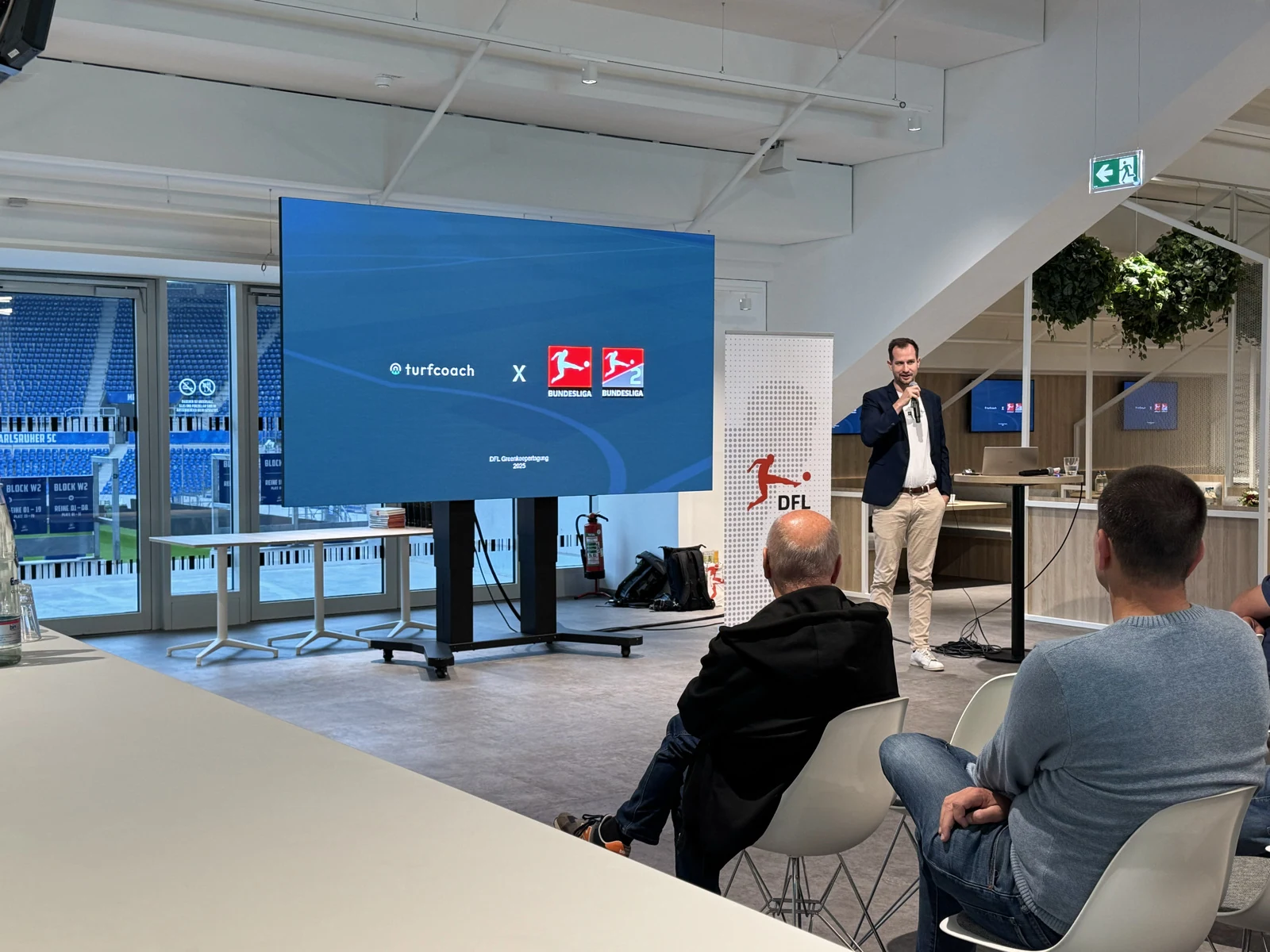
turfcoach is used as a tool for the DFL across the 36 stadiums of the Bundesliga and 2. Bundesliga. Bringing pitch information into a shared system supports communication between grounds teams, stadium management and the league.
The practical starting point is a pitch record that people can return to. In turfcoach, measurements can be viewed on a map and followed through their history. A report takes that information into a discussion without requiring every participant to navigate the underlying records.
Consider a hardness measurement. The average describes the pitch as a whole; the map shows where individual readings differ. Looking at both helps frame a more useful question than whether a single number is good or bad.
Keep the grounds team in the picture.
A reading becomes more useful when it sits alongside its date, location and maintenance history. That is the role of the software: making the evidence easier to review, while the people who know the pitch bring the context.
For the league, the opportunity is continuity: a conversation about pitch quality can refer back to the same record. For a stadium team, it is the ability to explain what has changed and put the reading alongside the work that preceded it.
That is how a common framework becomes useful in daily work. The software keeps information connected; grounds staff interpret it in the conditions they know. League-wide visibility and local judgement have different jobs, and the record gives them a place to meet.