
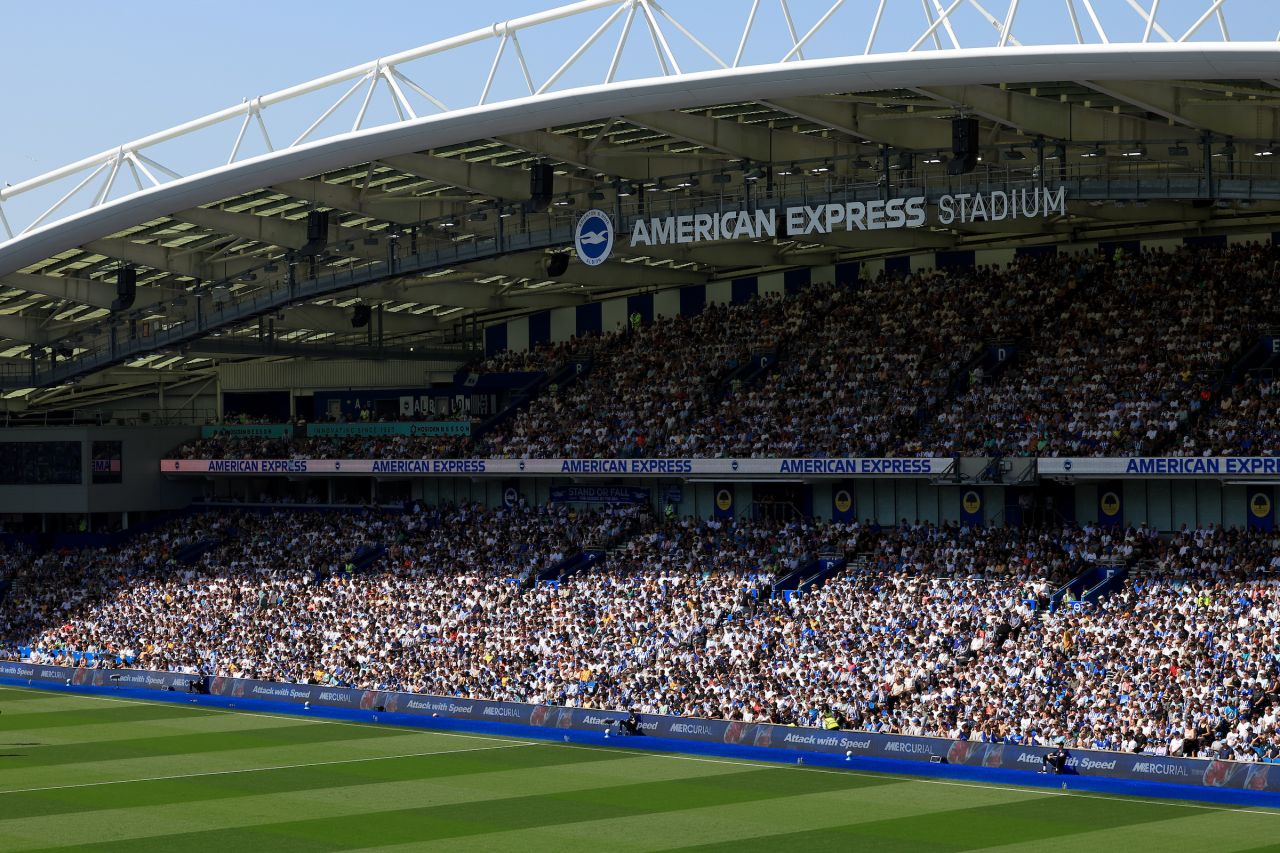
Two settings. Different daily demands.
Brighton uses turfcoach at its stadium and training facilities. Those settings serve the same club, but their usage and conditions differ. Seeing both matters when the work spans more than one site.
The stadium is the surface supporters see. Training facilities carry a different part of the club’s working week. For a grounds operation covering both, a club-wide view is useful only if it preserves the detail of each individual pitch.
For a club spanning both settings, the question is how to keep a useful record of each surface while making the information easy for others to understand. Measurements, history and reports provide different parts of that picture.
Understand each pitch on its own terms.
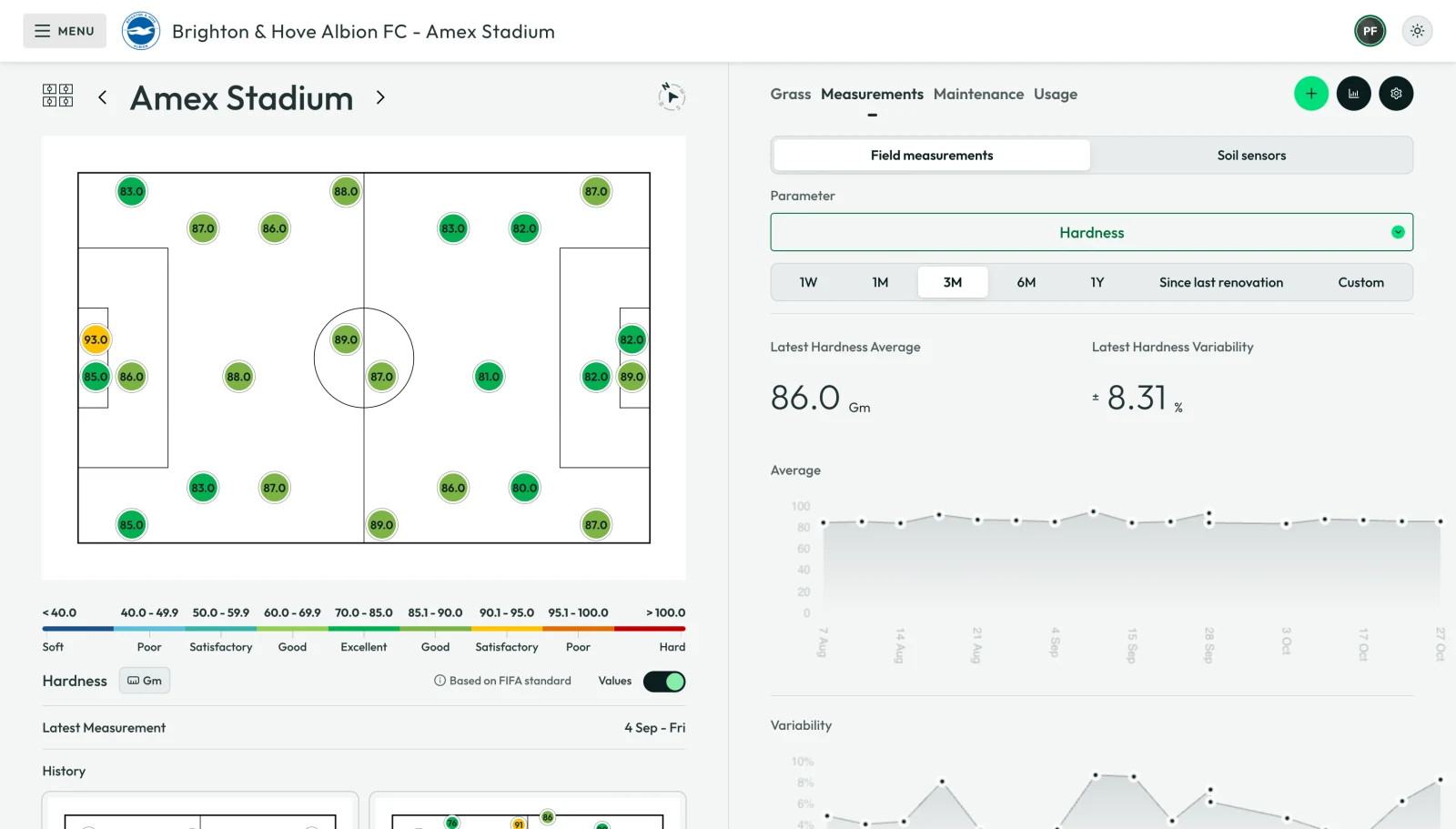
A measurement map shows where readings differ within a pitch. Its history adds the changes over time. Together, those views help a grounds team ask more specific questions about the surface in front of them.
Start with the map. Individual readings keep the differences within a surface visible: an average alone cannot show where the higher and lower values sit. The next question is about time. Was the same area different at the last measurement, or has the pattern persisted?
That is why the product keeps the measurement view beside its history. A groundskeeper can move from a specific reading to the wider pattern, then bring in knowledge of the work and conditions around it. The sequence is observation, comparison and interpretation.
Carry the context into the conversation.
Reports bring measurements and recorded work into the same conversation. The aim is a useful record for the people responsible for the pitches, wherever their next job takes them.
A useful report carries enough detail for someone outside the measurement round to follow the discussion. Which pitch was measured? When was it recorded? Where did the values differ? A map and its history give the discussion a shared starting point.
For a club using the software at its stadium and training facilities, this offers a common way to review different surfaces. Each pitch keeps its own record, while the format makes the information familiar wherever the conversation starts.